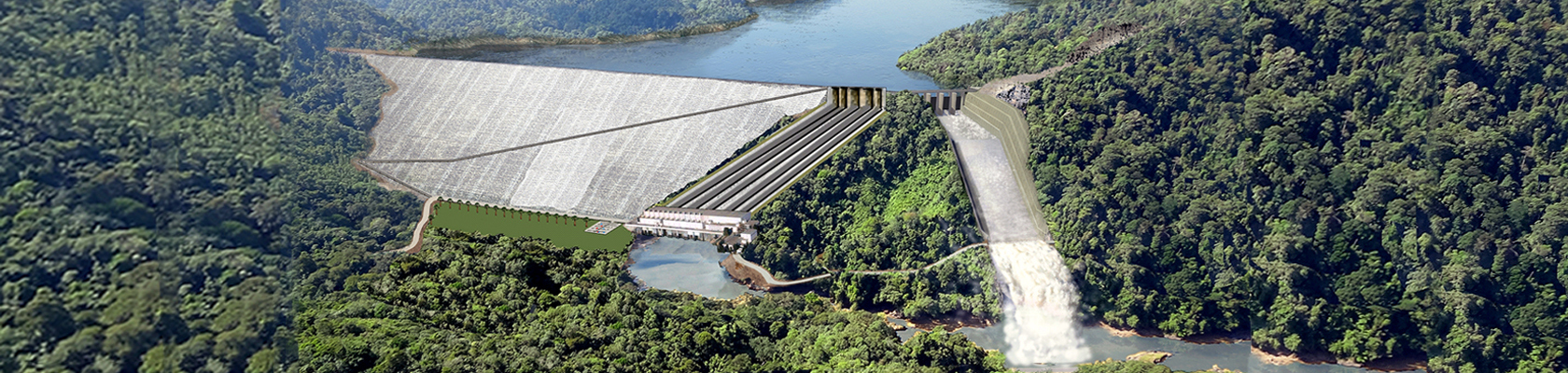
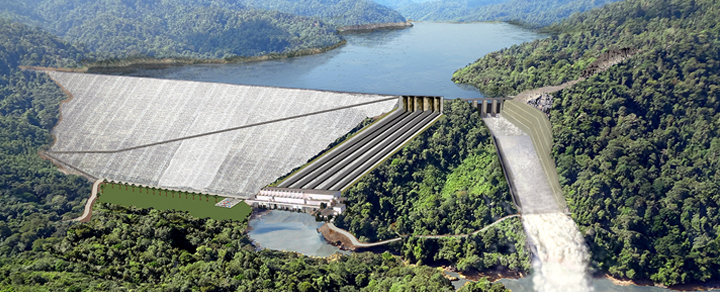
BALEH HYDROELECTRIC PROJECT
Environment, Social and Governance (ESG)
Hydropower Sustainability Standard
The Hydropower Sustainability Standard (HSS) is a globally recognised certification system that ensures accountability across the across the hydropower value chain, both upstream and downstream. It enables stakeholders including developers, operators, financiers and governments to demonstrate their commitment to sustainability.
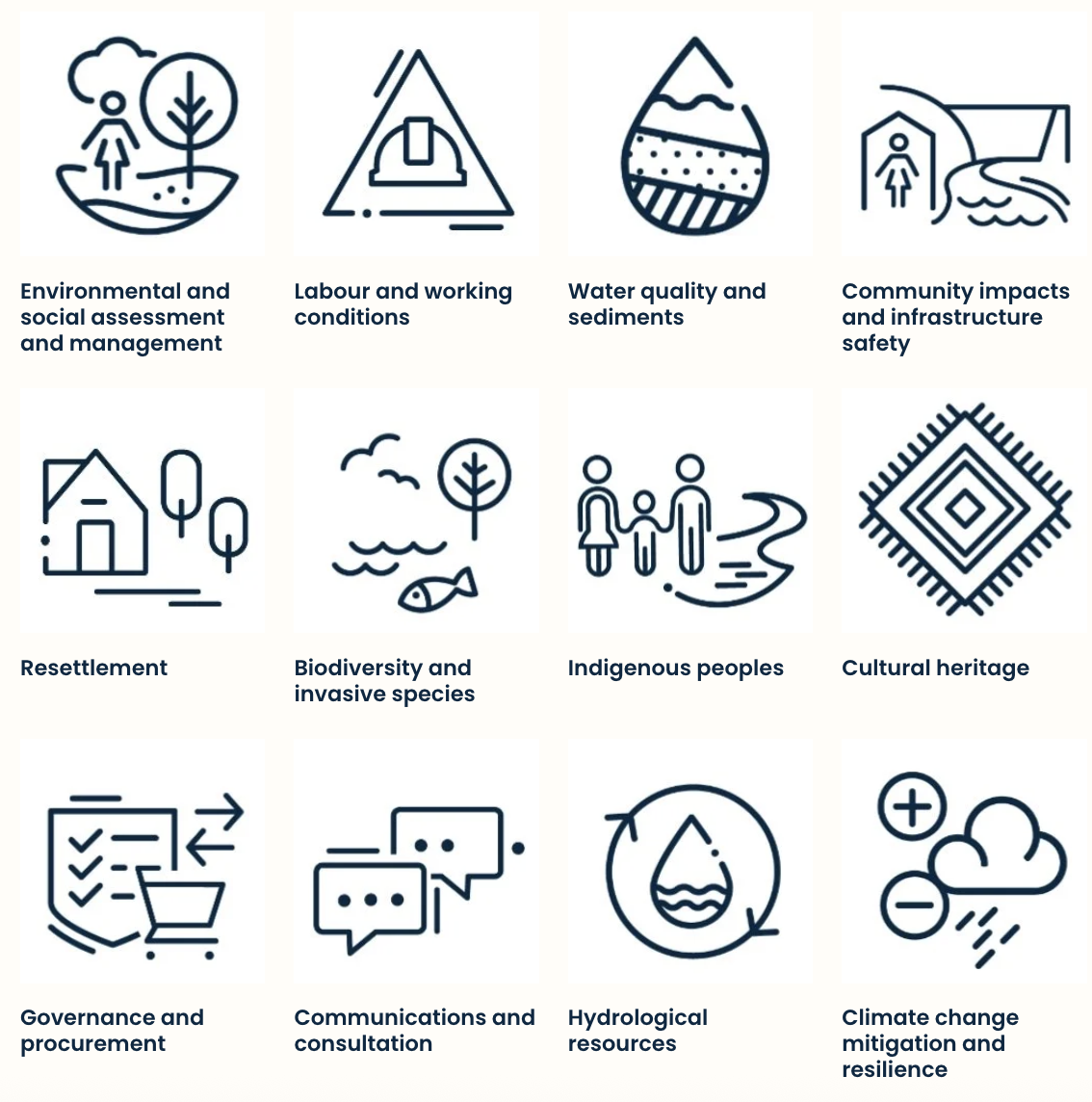
The HSS covers 12 ESG topics across two performance levels: good practice (minimum requirements) and best practice (advanced requirements). Each topic includes a principle and scope statement to clarify the intent and expected outcomes of the assessment.
Social and Environmental Impact Assessment (SEIA)
The SEIA for the Baleh HEP was prepared to identify, predict, evaluate and mitigate potential social and environmental impacts associated with the project.
Following the approval of the SEIA, Baleh HEP is committed to achieving and maintaining 100% compliance with environmental regulations throughout the project lifecycle by implementing the mitigation measures outlined in the Conditions of Approval (CoA).
- To access the reports, please refer to the documents and links provided below:
- Baleh HEP SEIA: Executive Summary and Conditional of Approval
- Baleh – Mapai 500kV Transmission Line Project ESIA: Executive Summary and Conditional of Approval
- Mapai 500/275/33 kV Substation: Executive Summary and Conditional of Approval
Note: Full documents are available upon request.
Social Management
HSS Requirement:
Responsible hydropower development requires harnessing its potential sustainably to generate positive impacts for both communities and the environment.
Corporate Social Policy:
To maximise positive impacts and minimise risks or adverse effects of its business activities on people, particularly in relation to key social and human rights considerations, including:
- Resettlement, cultural heritage and the livelihoods of affected communities, including Indigenous Peoples
- Public safety and health
- Labour management
|
Project Delivery |
Baleh HEP Social Management: |
|
Capital projects are developed with respect for human rights, ecosystems and local cultures, while contributing to long-term positive change. |
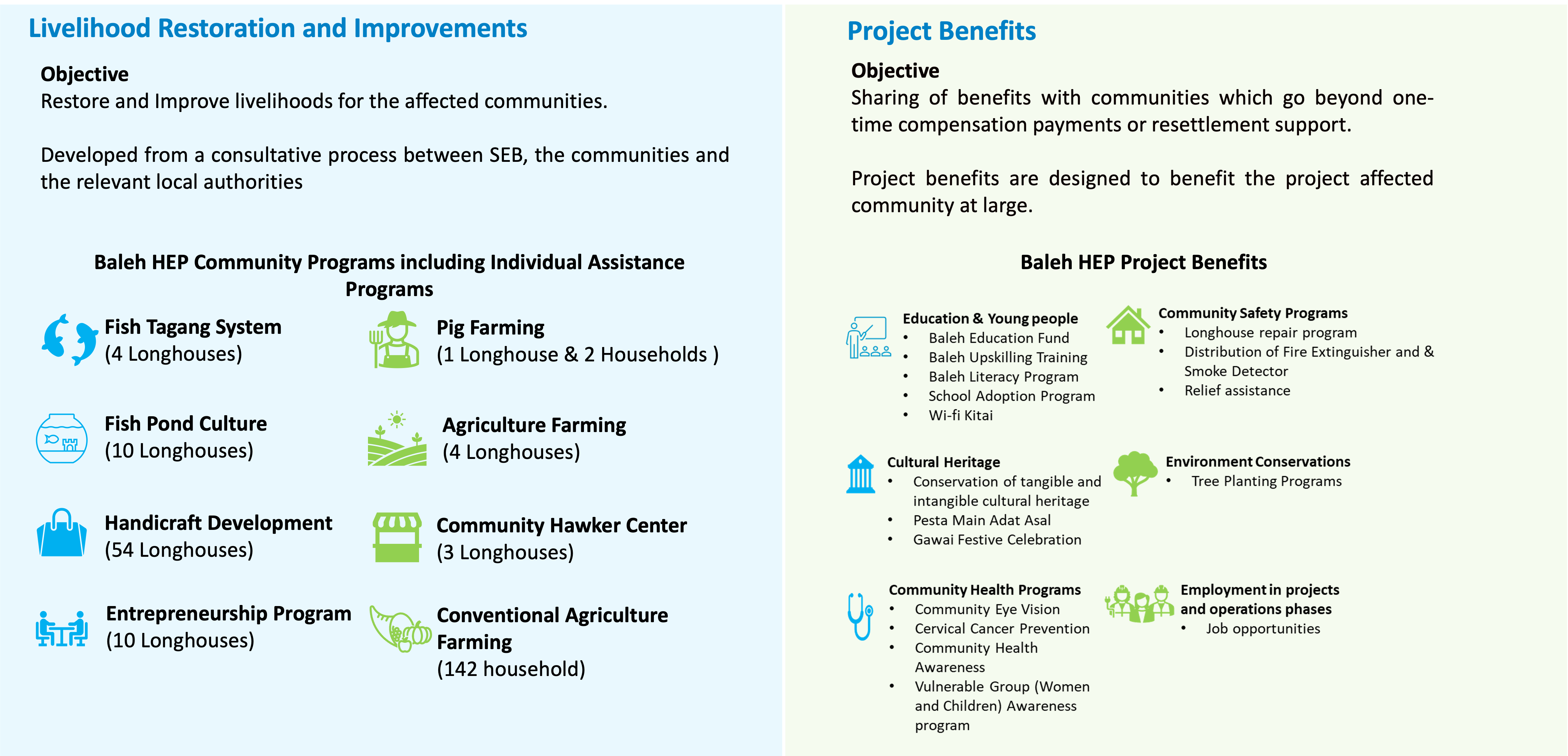
Livelihood restoration and improvement programmes, along with project benefits initiatives, are developed and delivered in alignment with the HSS and Sarawak Energy’s CSR’s policy. |
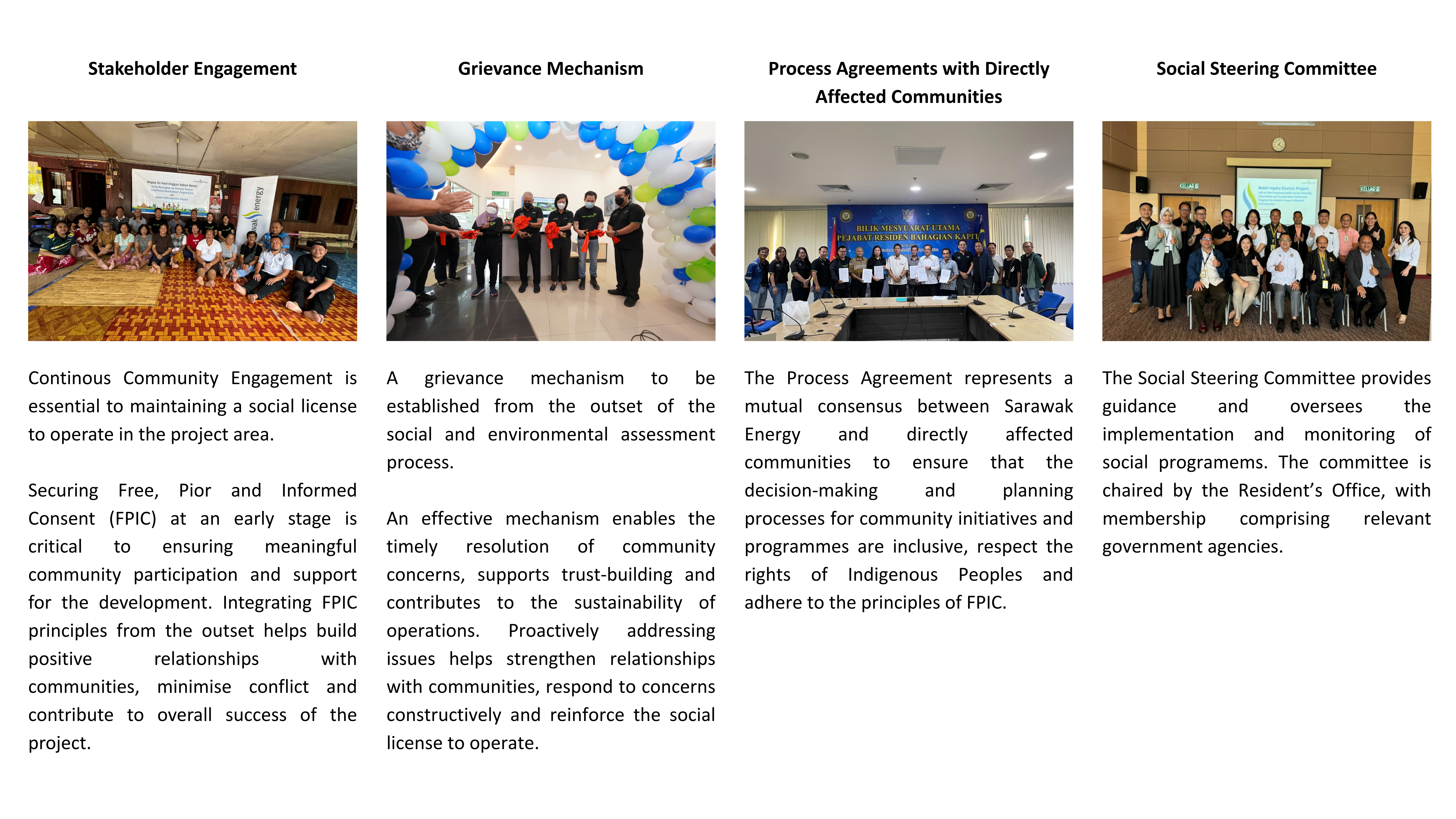
Key Social Management Components for Baleh HEP
Collaborating Agencies and Supporting Partners
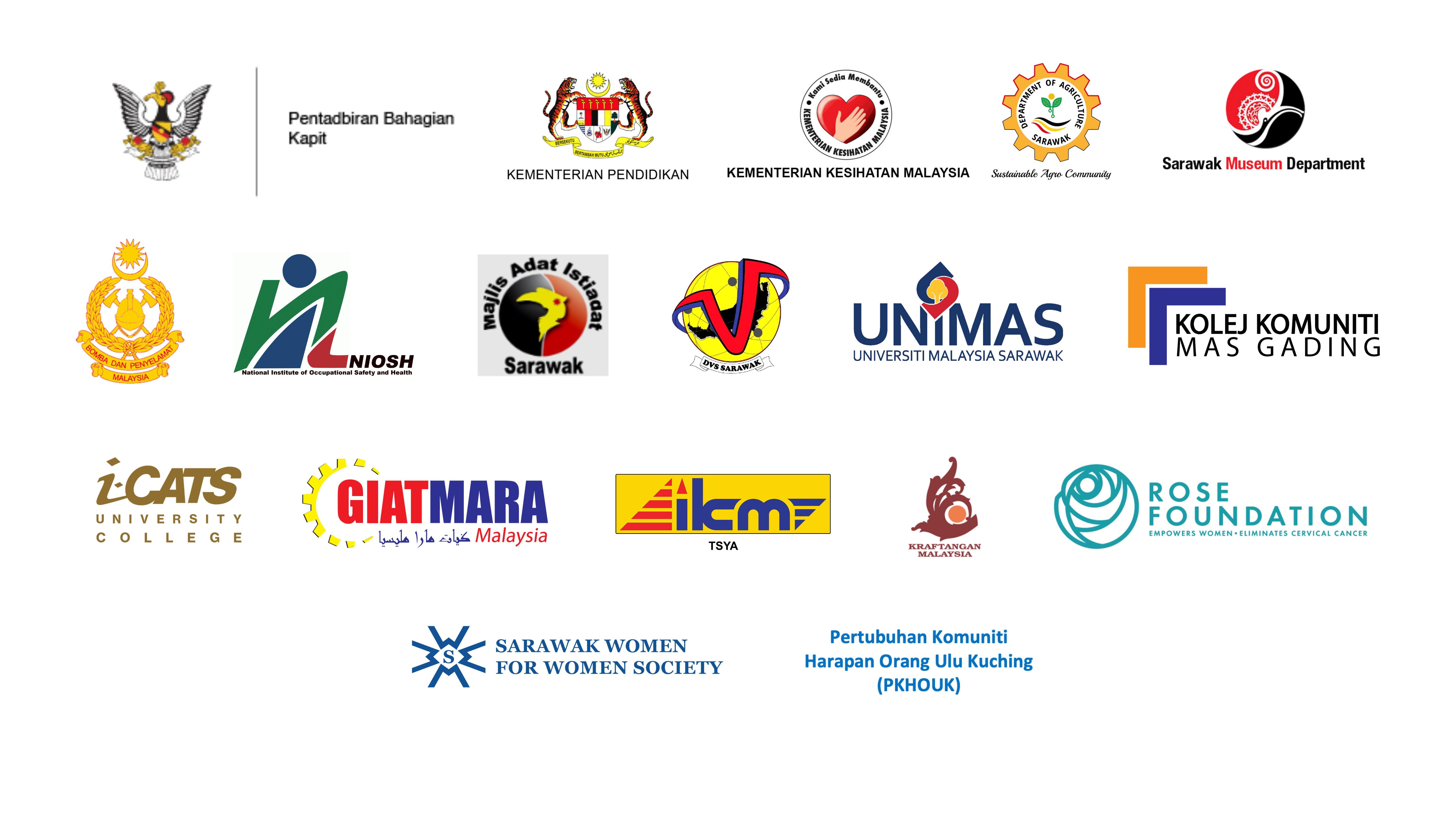
The implementation and monitoring of social programmes are carried out in collaboration with the Kapit Resident’s Office, with support from relevant government agencies.
The Baleh Social Steering Committee, established in 2023, provides guidance and oversees the delivery and monitoring of these programmes. The committee is chaired by the Kapit Resident’s Office and includes participation from key government agencies.
Sarawak Energy engages with committee members to raise awareness of sustainable hydropower development and the importance of advancing responsible energy practices.
Available Downloadable Executive Summary Project Documents:
- Community Development Plan (CDP)
- Livelihood Restoration Plan (LRP)
- Cultural Heritage Management Plan (CHMP)
- Rantau Penora Moving Back Assistance Plan (RPMBAP)
Environmental Impact Assessment (EIA) for Baleh HEP Quarry and Landfill
The development of both the landfill and quarry is classified as a Prescribed Activity under the First Schedule of the Natural Resources and Environment (Prescribed Activities) Order 1994, pursuant to Section 11A(1) of the Natural Resources and Environment Ordinance (NREO). Accordingly, EIA Reports for both the landfill and quarry have been submitted to the Natural Resources and Environment Board (NREB) Sarawak for approval.
To access the reports, please refer to the documents and links provided below:
- EIA for Waste Dumpsite for the Proposed Baleh HEP Main Dam – Civil Work: Executive Summary and Condition of Approval
- EIA for the Proposed Landfill Establishment at C11 Main Electrical and Mechanical: Executive Summary and Condition of Approval
- EIA for the Proposed Quarry B and Quarry C: Executive Summary and Condition of Approval
Biomass Removal Plan (BRP)
- Baleh HEP BRP: Executive Summary and Condition of Approval
Baleh HEP Environmental Management Plan (EMP)
The EMP for the Baleh HEP has been developed to ensure the effective implementation of the mitigation measures recommended in the SEIA.
- Baleh HEP EMP: Executive Summary
Note: Full documents are available upon request
Available Downloadable Project Documents:
Social and Environmental Impact Assessment (SEIA):
- Baleh HEP: Executive Summary and Condition of Approval
- Baleh–Mapai Transmission Line Project (TLP): Executive Summary and Condition of Approval
Environmental Impact Assessment (EIA):
- Mapai Substation: Executive Summary and Condition of Approval
- Baleh HEP Landfill (BLP5 & BLP6)
- Quarry B and Quarry C
Other Environmental and Management Plans:
- Baleh HEP BRP
- Baleh HEP EMP
- Baleh HEP Biodiversity Management Plan
- Baleh HEP Water Quality Management Plan
Biodiversity Management Plan (BMP)
Baleh HEP is committed to integrating biodiversity conservation into every phase of project development, with the aim of minimising potential adverse impacts on the surrounding biodiversity.
The BMP has been developed to provide a comprehensive framework of management strategies and mitigation measures specifically tailored to address biodiversity-related impacts identified in the SEIA report and other relevant biodiversity assessments for Baleh HEP.
To access the plan, please refer to the documents and link provided here.
Water Quality Management Plan (WQMP)
The Baleh HEP WQMP has been developed to ensure that all water quality issues from the implementation stage through to the operational phase are appropriately addressed and mitigated, in compliance with relevant state and federal environmental requirements.
To access the plan, please refer to the documents and link provided here.